DTF Ink: The Complete Guide to Choosing, Using, and Maintaining It
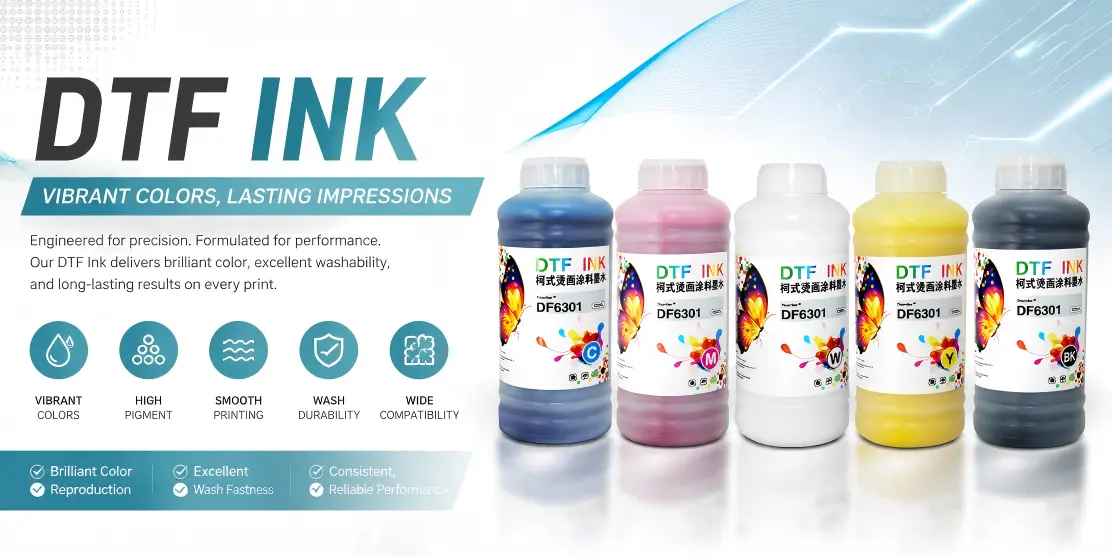
As custom‑apparel printing businesses grow worldwide, DTF ink (Direct‑to‑Film ink) has quickly become one of the most reliable printing consumables for small‑batch producers and large industrial textile manufacturers. High‑quality DTF transfer ink unlocks flexible, long‑lasting, full‑color heat transfers that can be applied across nearly every fabric type without complicated pre‑treatment work. In this complete guide, we break down what premium water‑based DTF pigment ink is, its core advantages, technical specifications, and key tips for selecting stable DTF ink for your daily printing workflow.
What Exactly Is Premium DTF Ink?
DTF ink is a specialized water‑based pigment ink formulated exclusively for direct‑to‑film printing technology. Unlike DTG or sublimation ink, this DTF ink is printed onto PET transfer film first, coated with hot‑melt adhesive powder, cured, then heat‑pressed permanently onto cotton, polyester, blends, denim, nylon and leather materials. Top‑grade DTF pigment ink (CMYKW, cyan‑magenta‑yellow‑black‑white) delivers excellent white‑ink opacity for dark‑colored garments, eliminating common faded‑color issues on black and deep‑toned fabrics.
Core Advantages of Industrial‑Grade DTF Ink
Choosing high‑performance DTF ink directly improves your finished print quality, reduces printer‑head clogging, and lowers long‑term production downtime costs. Below are the most valuable benefits of premium direct‑to‑film ink:
- Superior wash fastness rated 4‑5 grade, withstands over 50 industrial washing cycles without cracking, peeling or color‑fading
- Outstanding elasticity, prints stretch freely on spandex and flexible fabrics with zero breakage
- Smooth, stable ink‑flow performance, minimizes nozzle clogging for DTF printers equipped with XP600, I3200, 4720 print‑heads
- Wide‑gamut vibrant colors, delivers sharp photo‑realistic graphics and smooth gradient artwork transfers
- Eco‑friendly water‑based formula, safe for operators and skin‑friendly finished apparel prints
- Universal fabric compatibility, no pre‑coating required before heat‑transfer application
DTF Ink VS DTG & Sublimation Ink: Main Differences
Many new printing‑shop owners struggle when choosing between DTF ink, DTG ink and sublimation ink. Each printing consumable fits different business goals:
Works for all fabric types, supports dark garments, low‑minimum‑order setup, excellent for custom‑merchandise and street‑wear printing.
Best‑suited for 100% cotton, requires fabric pre‑treatment, soft hand‑feel but higher operational maintenance costs.
Only adheres well to high‑polyester fabrics, cannot print vivid graphics on dark clothing materials.
Quick Buying Tip For DTF Ink Buyers
Low‑cost generic DTF ink often causes frequent print‑head blockages, poor white‑ink coverage and transfers that crack after only a handful of washes. Premium DTF transfer ink costs slightly more upfront, but dramatically cuts maintenance costs and product‑reject waste in mass‑production environments.
Frequently Asked Questions
Absolutely yes. Premium white DTF ink creates an opaque base layer. When you print CMYK colors over the white base, your artwork will stay bright and vivid even on deep‑black, navy and dark‑red fabrics.
High‑quality water‑based DTF pigment ink transfers are laboratory‑tested for more than 50 wash cycles, retaining color vibrancy and flexibility under regular household‑laundry conditions.
Our premium DTF ink works perfectly for XP600, I3200‑A1, 4720, DX5, DX7, L1800 and most popular desktop & industrial DTF printer print‑heads.